

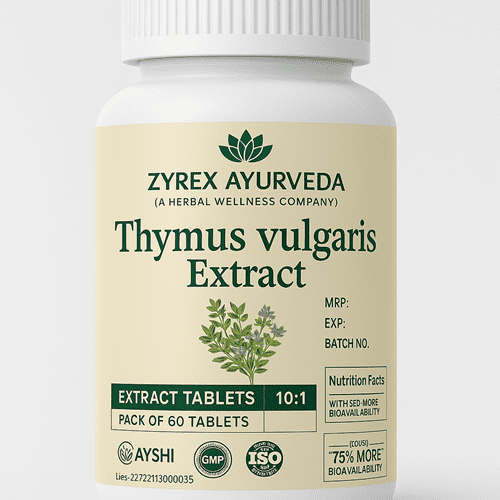
Thymus vulgaris extract, commonly known as thyme, offers numerous benefits due to its antioxidant, antimicrobial, and anti-inflammatory properties, including soothing coughs and sore throats, improving digestive health, and lowering blood pressure and bad cholesterol. It can also be beneficial for skin conditions like acne, can boost mood, and helps with bone health as a source of Vitamin K and other nutrients.
Health benefits
- Antioxidant and anti-inflammatory: Helps protect the body from oxidative stress and inflammation.
- Antimicrobial: Exhibits antibacterial and antifungal properties, making it effective against certain infections and useful for preventing food poisoning.
- Respiratory support: Can soothe coughs and sore throats and may help with bronchitis, laryngitis, and other respiratory infections.
- Cardiovascular health: Can help lower blood pressure and bad (LDL) cholesterol levels.
- Digestive health: Provides relief from indigestion, gas, and bloating. It may also be helpful for conditions like gastric ulcers and ulcerative colitis.
- Skin health: Contains anti-inflammatory properties that can help treat acne. When applied topically, it can also relieve minor bites, stings, and rheumatic aches.
- Mood enhancement: A compound called carvacrol may have mood-boosting effects.
- Bone health: A rich source of Vitamin K, iron, calcium, and manganese, which are important for strong bones.
- Immune support: Some studies suggest Thymus vulgaris may help regulate the immune response and have protective effects against viral infections.
Potential side effects
- Thymus vulgaris extract is generally considered safe, especially in cosmetic formulations.
- Individuals with sensitive skin or allergies to thyme may experience irritation, itching, redness, or dryness, particularly with excessive use.
- It is recommended to perform a patch test before widespread application, especially for sensitive individuals.
Reviews
There are no reviews yet.